Financial Operations Platform
A full financial operating system spanning source intake, classification, rules, exception review, reconciliation, close controls, reporting, and a traceable record of how each result was produced.
- Source intake
- Classify + rules
- Exception queue
- Reconciliation
- Close + reports
- Audit events
The operational problem
Small operating companies run real accounting through a patchwork: transactions arrive from banks and platforms, classification lives in someone’s head, and the trail from source document to reported number breaks the moment anyone asks for it.
Why the existing process failed
Generic accounting software records what a person types. It does not ingest sources, propose classifications, hold uncertain items for review, or preserve the evidence chain. The work around the ledger stayed manual.
What was built
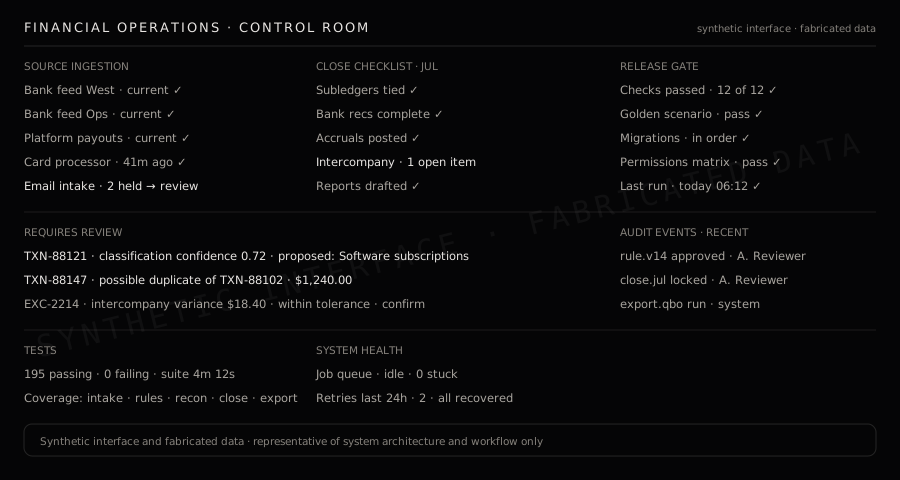
A financial operating system on a PostgreSQL core: chart-of-accounts and entity structure, transaction intake, rule-based proposed classifications, human approval and exception queues, reconciliation, close workflow, role-based permissions, versioned rules, audit events, and source-document linkage, with export and integration paths to existing accounting systems.
What the system automates, calculates, and controls
Intake, proposed classification, matching, exception routing, close checklists, and report generation, with concurrency-safe background job processing so long work retries safely instead of failing silently.
Where human judgment remains
Approvals. The system proposes; a person confirms anything uncertain, sensitive, or new. Rules are versioned so yesterday’s judgment is tomorrow’s automation.
How correctness was tested
195 automated tests across the Python core and Node services, plus a 12-check release gate that every build must pass before it ships, including a full golden-month scenario run against known-correct output.
What changed
The build demonstrated that a complete, controlled financial pipeline can run as software with people positioned only at the judgment points.
Disclosure
Completed build. It has not yet been operated as a deployed system for a paying client, and no client outcome is claimed. The engineering evidence is verifiable in private review.
Related service: Finance and control systems
Methods and research context
- Production ML engineering Relevant research reference